Stays on your machine
Runs entirely on Apple devices using on-device machine learning. Your audio never touches a server or a third-party API.
Private, on-device interview transcription
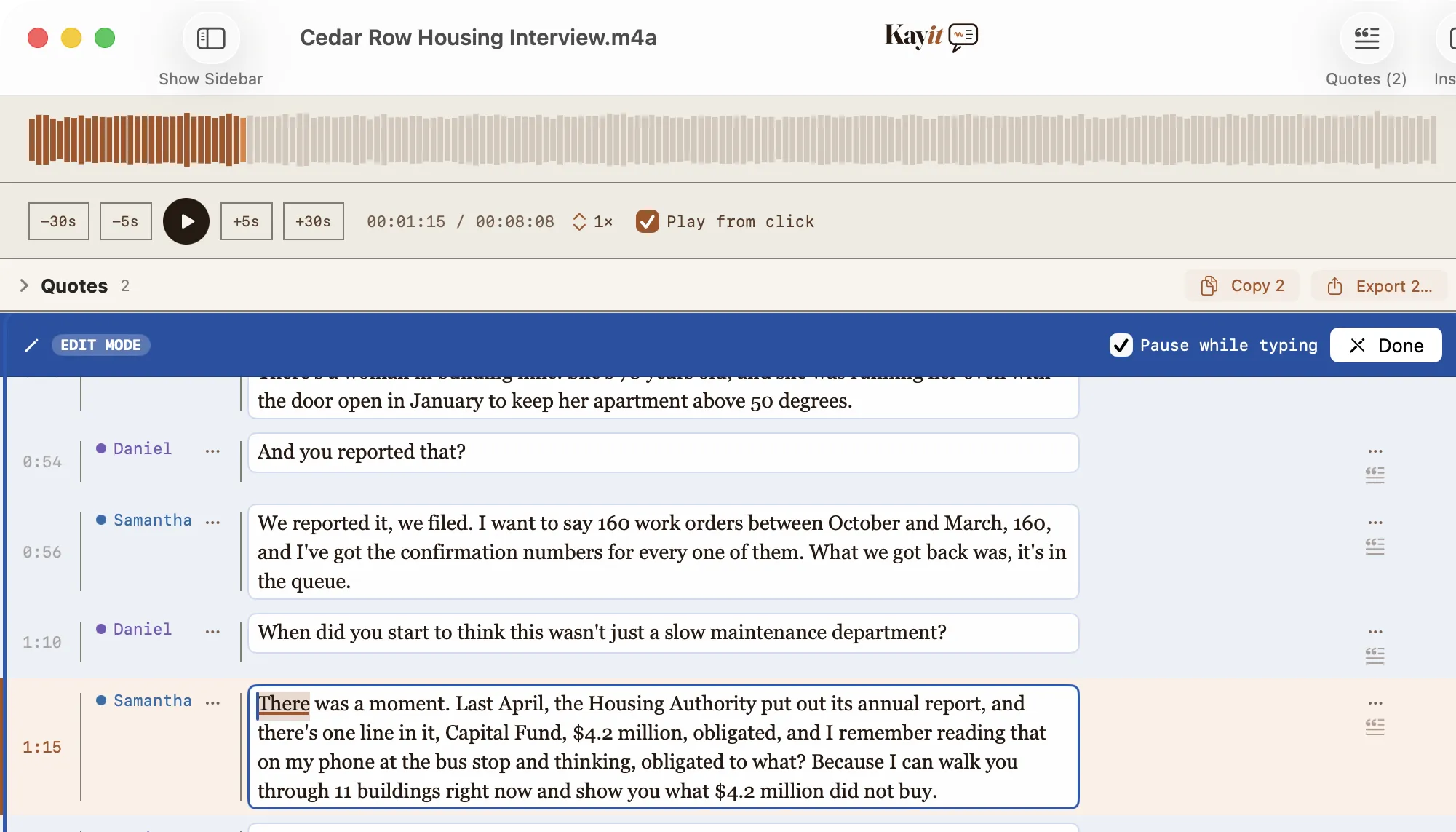
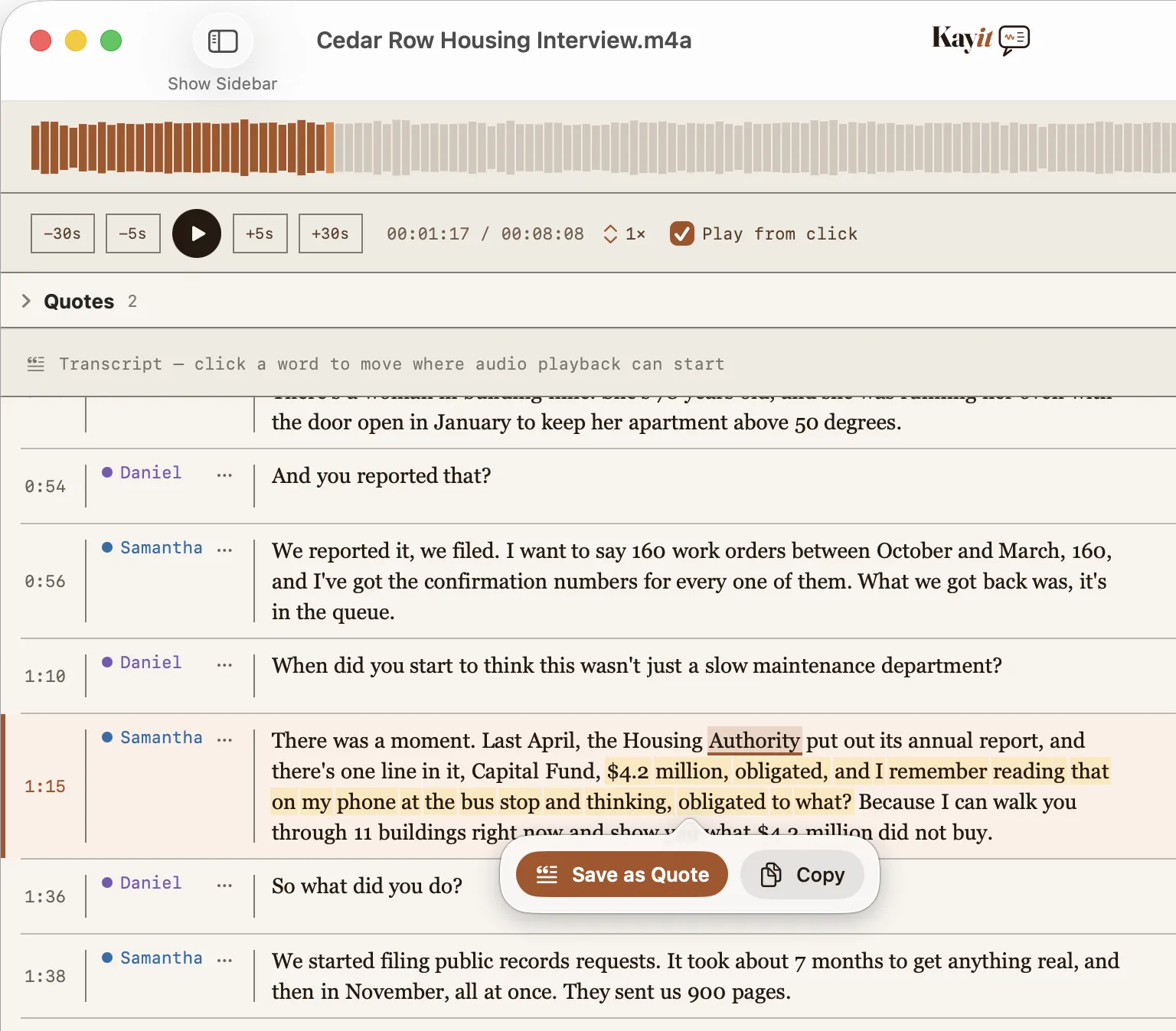
Kayit transcribes your interviews locally on your Mac, with speaker identification and quote management built in — so your audio, and the transcription, never touch a server.
Runs entirely on Apple devices using on-device machine learning. Your audio never touches a server or a third-party API.
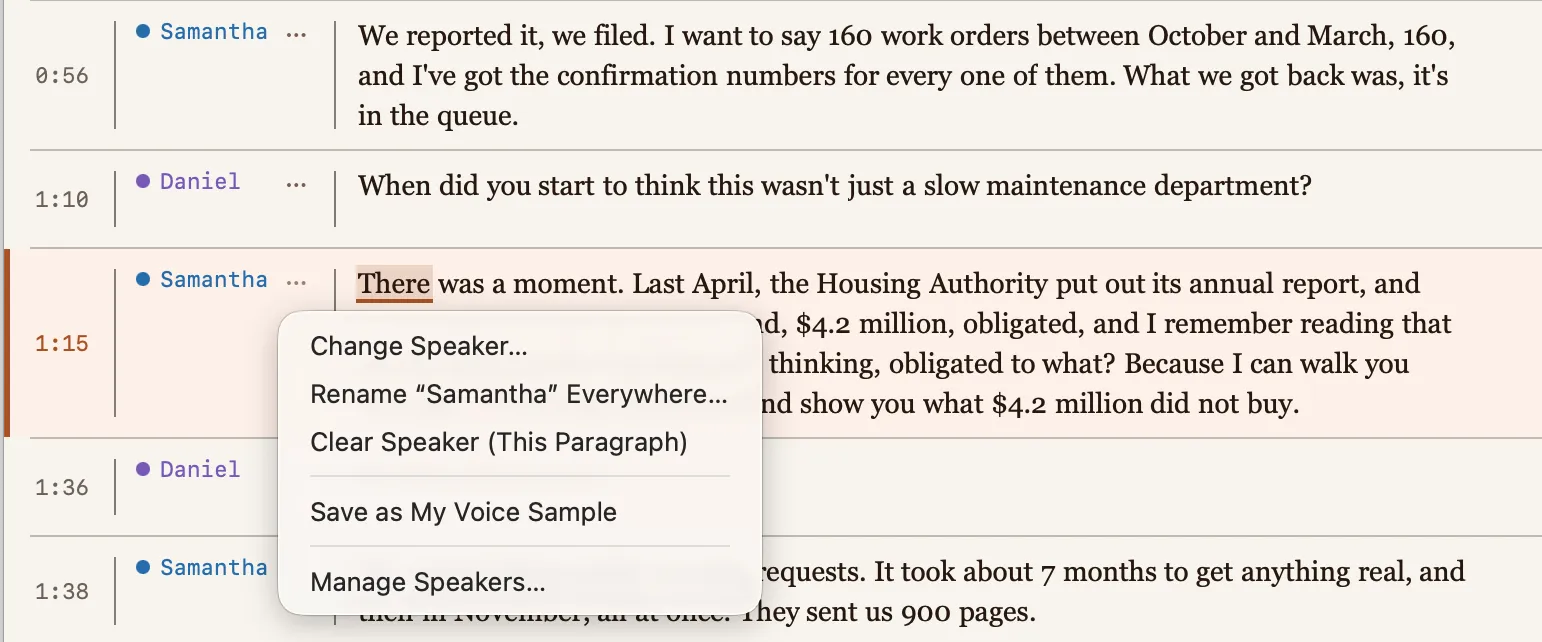
Automatic speaker identification separates voices without cloud diarization. Rename speakers in your notes after the fact.
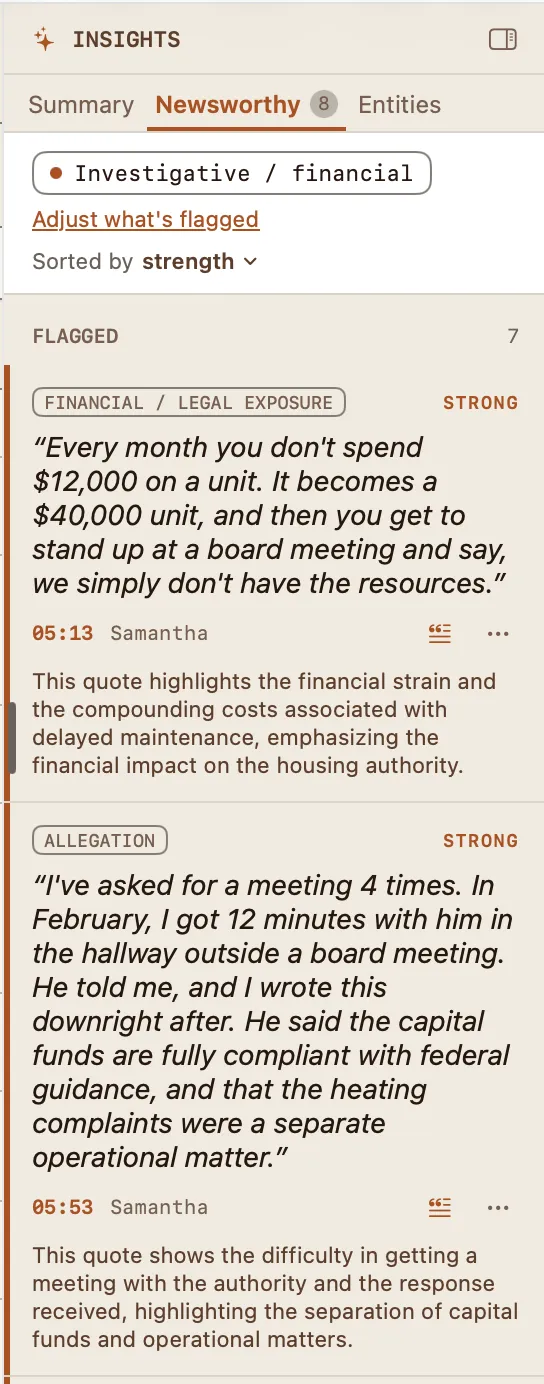
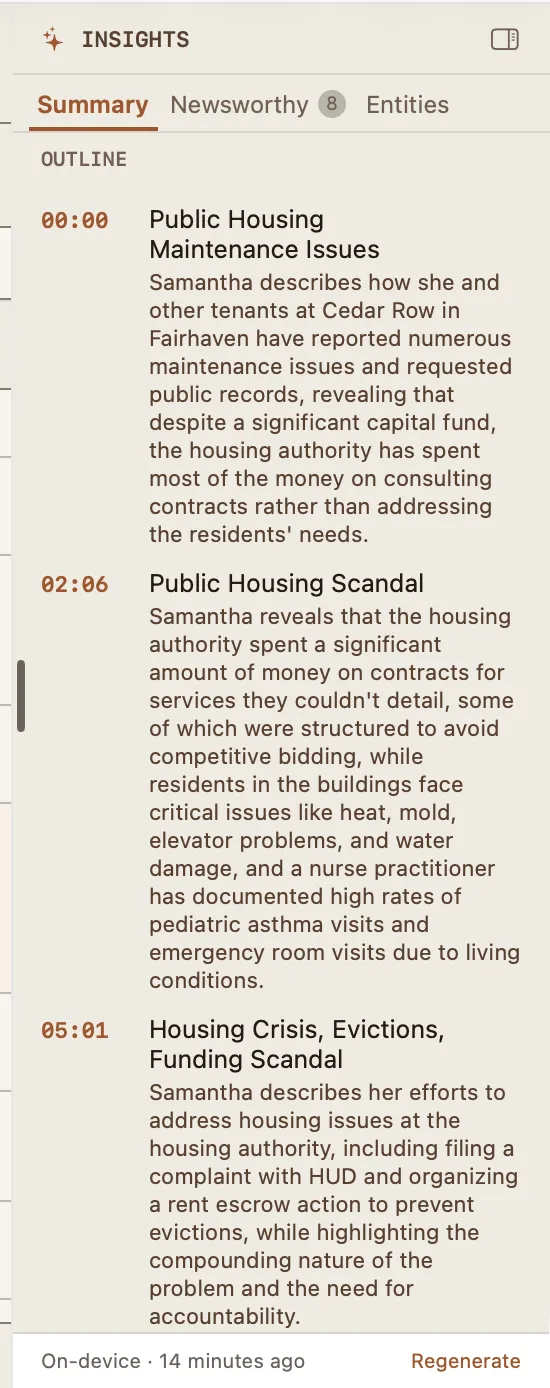
An optional on-device AI gives you a plain-language summary, a click-through timestamped outline, and suggested pull-quotes — plus the people, organizations, and places mentioned. It all runs on your Mac, and switches off per interview or across your whole newsroom if you have an anti AI policy.
Audio and text stay in sync — click any word to jump to that moment, or save any passage as a quote. Export to Markdown, plain text, quotes, or audio clips, plus an open .transcript.json sidecar that drops straight into Obsidian. Your files, no lock-in.
For journalists
When a confidential source speaks on the record, that audio is the most sensitive file you hold. Cloud transcription services upload it to servers you don't control, subject to breaches, subpoenas, and terms that can change overnight. Kayit never uploads anything. Transcription, speaker separation, and quote extraction all happen on your Mac — so the recording, the transcript, and your notes stay exactly where you put them.
Initially built for journalists, but is perfect for anyone bound to keep a conversation private. If your IT or security team blocked cloud transcription, Kayit is what they could approve.
Pricing
Start with a free trial — no account, no per-minute fees, and no upload limits. Cloud tools meter your minutes and cap your uploads; Kayit doesn't, because your audio never leaves your machine.
Rolling it out across a newsroom, firm, or research team? Ask about volume licensing →